





















































































What the $20 Casino Rule Really Means

The $20 rule at the casino—often called the “$20 method” or “$20 slot method”—is a simple budgeting strategy that many casual players use to keep gambling fun and controlled. It’s not a secret formula to win, but a way to set a small, clear limit so you don’t spend more than you planned. Many players treat $20 as a fixed “play budget” for one session, and once it’s gone, they walk away from the machine or table. This small amount keeps the risk low while still giving you a decent number of spins or hands.
What the $20 rule really means in practice is that you decide ahead of time how you’ll use that $20 and stick to it. For example, you might put $20 into a slot machine and only play 1‑cent or 2‑cent bets per spin to stretch your playtime. Or you might use the same $20 on a blackjack table, making $5 or $10 bets instead of jumping to $25 or $50 stakes. If your $20 turns into $30, $40, or even $100, you can choose to cash out and enjoy that win instead of risking it all back. Setting this rule before you start helps you avoid the “just one more spin” feeling that can quickly turn a small loss into a big one.
Many players like the $20 rule because it keeps gambling light and affordable. Instead of dropping $100 or more on a single machine, they play with $20 and see how long it lasts. If you spend $1 per spin on slots, a $20 budget can give you around 20 spins before you’re out; if you bet 50 cents, that number jumps to 40 spins. On a $5 minimum blackjack table, your $20 might cover 4 hands, which is enough to test your luck without feeling like you’re risking a big chunk of your monthly budget. By treating the $20 as money you’re okay to lose, players can relax and focus on entertainment instead of stress.
The rule also protects you from chasing losses when things aren’t going well. For instance, if you start with $20 and drop to $10 after 15 spins, the $20 rule encourages you to stop instead of reaching for your wallet to add another $40 or $80. This habit can help avoid the “tilting” effect, where bad streaks make you play faster or bet bigger to try to win back what you’ve lost. Many experienced gamblers point out that the games are built with a house edge, so increasing your bets after a loss doesn’t change the odds; it just increases your risk. A $20 cap keeps that risk small and predictable.
In real‑world use, players often add a few extra guidelines to the $20 rule to make it more concrete. One common version is: “Put $20 into one machine and stop if you lose it all or if your balance hits a target like $30, $40, or $100.” For example, if you pump $20 into a penny slot, set your bet size low, and your balance climbs to $40, many people would cash out and consider that a successful session. If it drops to $0 after 30 spins, they walk away knowing they didn’t push farther. This approach still lets you feel like a winner when luck runs good, while keeping the worst‑case loss clearly capped at $20.
The biggest advantage of the $20 rule is that it adds structure to a game that’s usually all about impulse. It’s especially useful for first‑time visitors, short trips, or nights out when you want to try the casino without a big financial hit. For example, if you’re on a quick weekend getaway and set a $20 limit per visit, you can drop by the casino two or three times over the weekend and still only risk $60 total. At the same time, the rule doesn’t make the games safer mathematically; the house still has its edge, and you can still lose your $20 quickly on a high‑volatility slot or a rough blackjack shoe.
In short, the $20 rule at the casino is a simple, budget‑friendly way to play that focuses on fun and control. It lets you set a clear amount—like $20 for one machine or one short session—and decide ahead of time what you’ll do if you win or lose. Whether you treat it as a strict ceiling, a “only $20 per spin” cap, or a “win‑and‑walk‑away” trigger, the core idea is the same: know how much you’re willing to risk, use it on low or moderate bets, and respect that limit when you’re done. Applied this way, the $20 rule can help you enjoy the casino without feeling like you’ve gambled away more than you planned.
FAQ
Who Makes Wheel of Fortune Slots? The IGT Secret Revealed
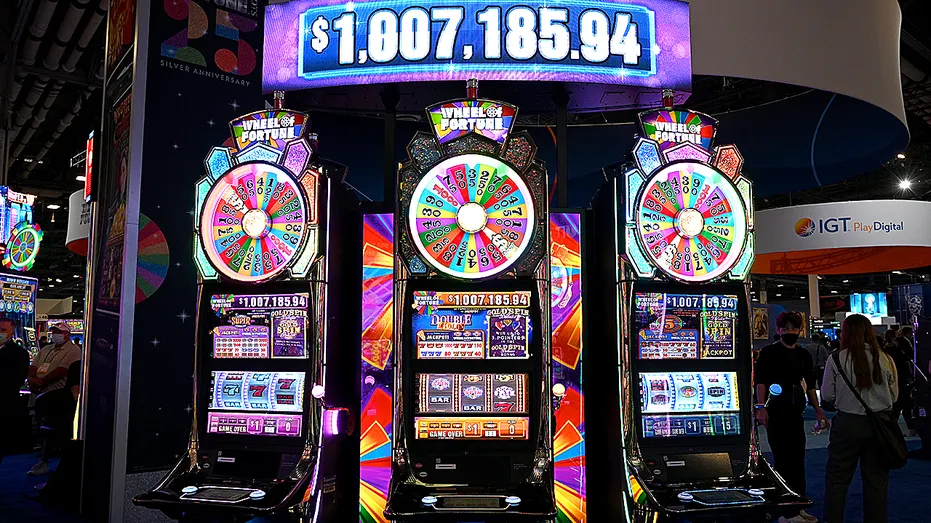
Wheel of Fortune slots are made by IGT (International Game Technology), a top company that builds slot machines and gaming software for casinos all over the world. IGT launched the first Wheel of Fortune slot machine in 1996, and since then, it has become one of the most popular slot brands in both land-based and online casinos. The game has an RTP (return-to-player) of about 96%, which means players can expect to get back $96 for every $100 wagered on average over time.
Wheel of Fortune Entry Guide: How to Apply and Audition
To enter for a chance to play Wheel of Fortune, start by applying through the show’s official contestant page. The application asks for your basic details, and you can usually add a photo plus a short video introduction so the casting team can get a sense of your personality. For example, a lively one-minute video where you smile, speak clearly, and share why you would be a fun contestant can help your application stand out.
What the $20 Casino Rule Really Means
The $20 rule at the casino—often called the “$20 method” or “$20 slot method”—is a simple budgeting strategy that many casual players use to keep gambling fun and controlled. It’s not a secret formula to win, but a way to set a small, clear limit so you don’t spend more than you planned. Many players treat $20 as a fixed “play budget” for one session, and once it’s gone, they walk away from the machine or table.
How has technology influenced the game of roulette?
How has technology influenced the game of roulette, such as with electronic and automated versions of the game? One of the most significant technological advancements in the game of roulette has been the introduction of electronic roulette tables. These tables feature a digital display that simulates the spinning of the roulette wheel, and players can place their bets on a touchscreen interface. This allows for faster gameplay, as the wheel can be spun more frequently than with a traditional roulette table.
How did the introduction of online casinos impact the game of roulette?
How did the introduction of online casinos impact the game of roulette? The introduction of online casinos has had a significant impact on the game of roulette. Online casinos made roulette and other casino games easily accessible to anyone with an internet connection. Players can now enjoy their favorite casino games from the comfort of their own homes, without having to travel to a land-based casino. Online casinos also introduced new variations of roulette, such as multi-wheel roulette and mini-roulette, which are not typically found in traditional casinos.
Wheel of Fortune Casino Ontario Guide: Login, Games and Casino Information
This site only collects related articles. Viewing the original, please copy and open the following link:What the $20 Casino Rule Really Means